
Moomintroll: Winter’s Heat, the sequel to Snufkin: Melody of Moominvalley, is principally the proper instance of a comfortable sport.
It follows Moomintroll as he unintentionally wakes from hibernation in the course of winter and emerges right into a snowy, unfamiliar world, the place he should meet unfamiliar beings and go on adventures as a way to carry again spring. This story, acquainted to generations of Moomin followers (and retold in principally each Moomin adaptation you may think about), comes first from Moominland Midwinter, one of many authentic chapter books written by Tove Jansson.
Article continues beneath
You could like
Picture 1 of 4
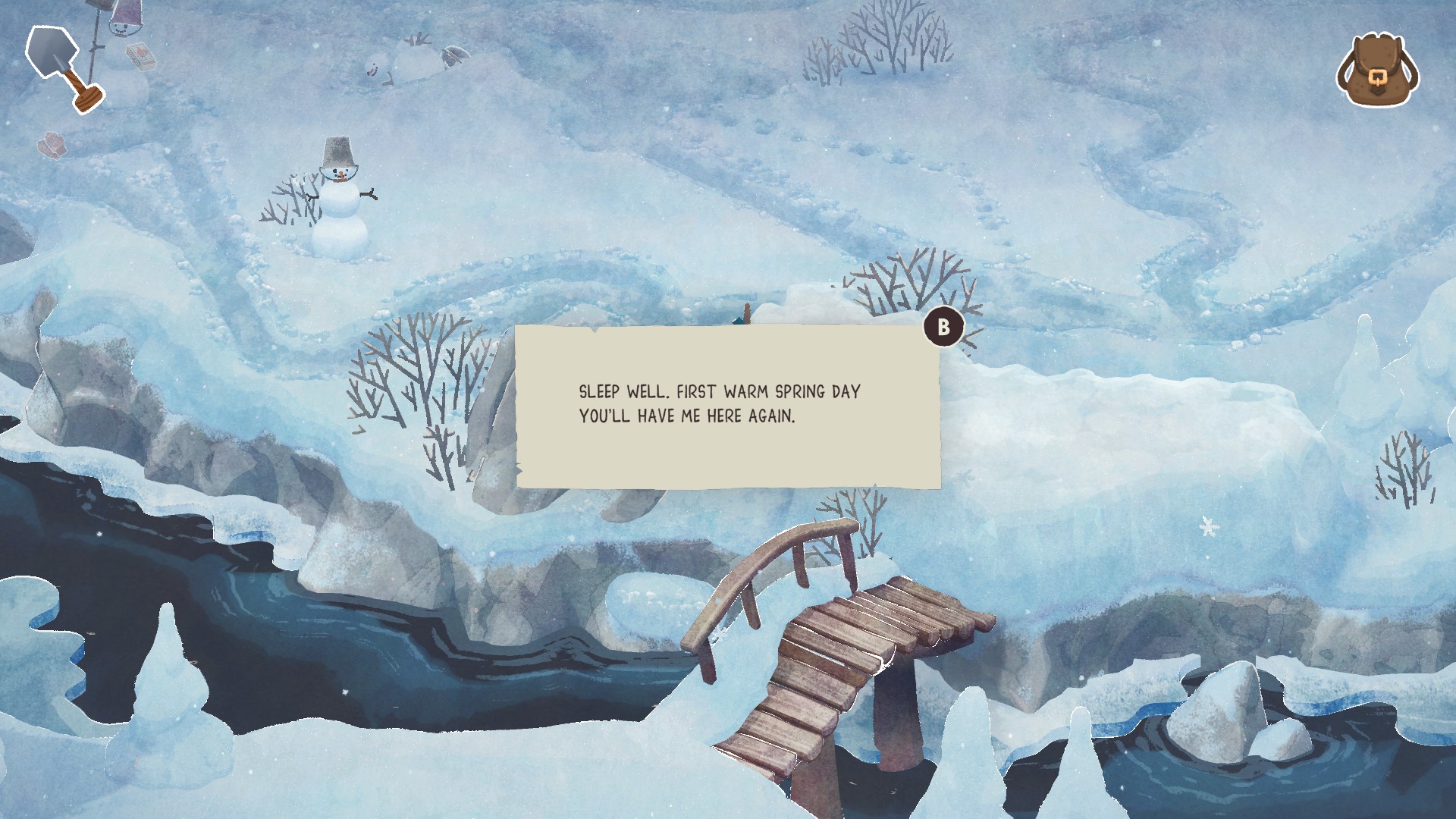
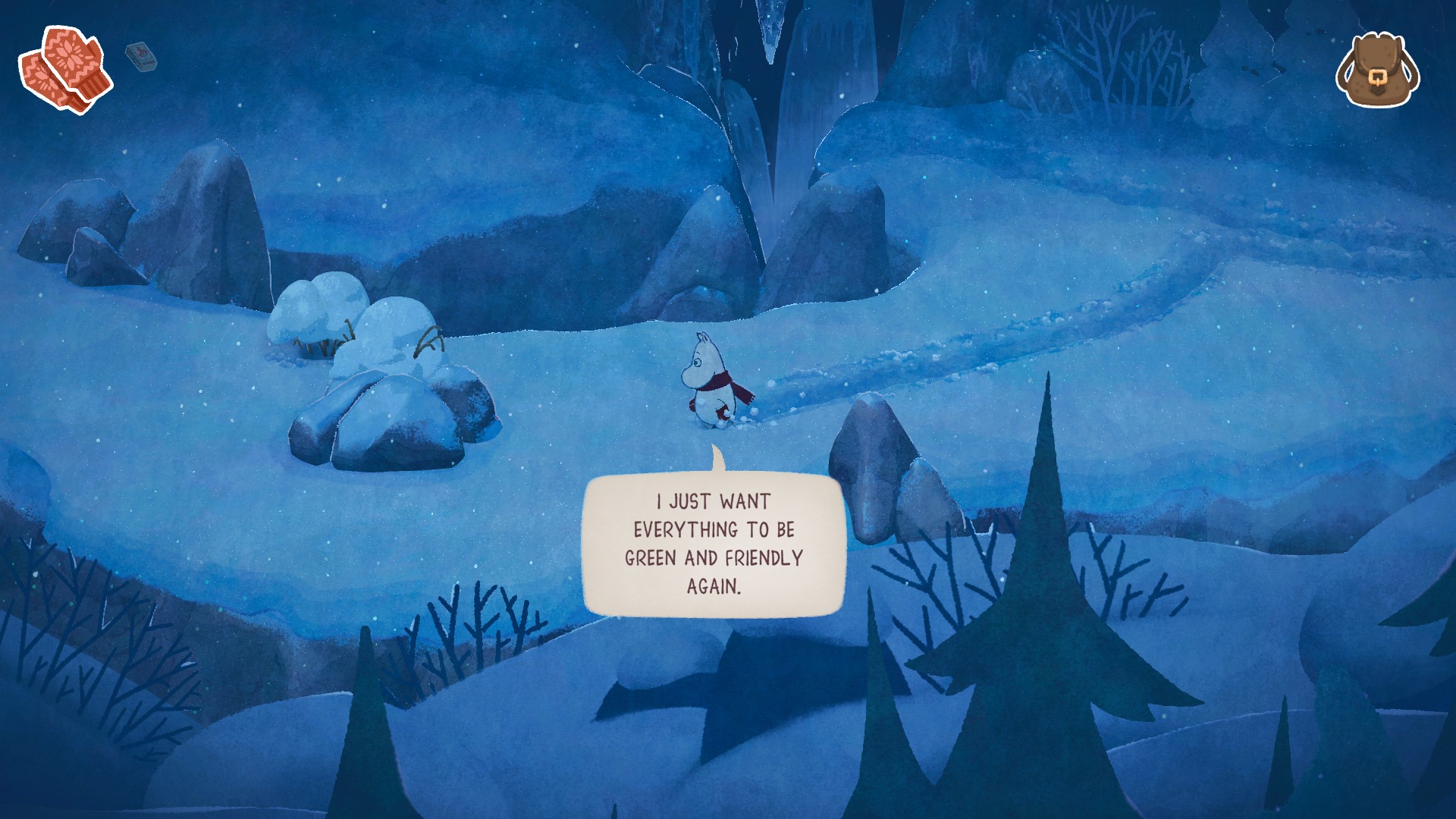
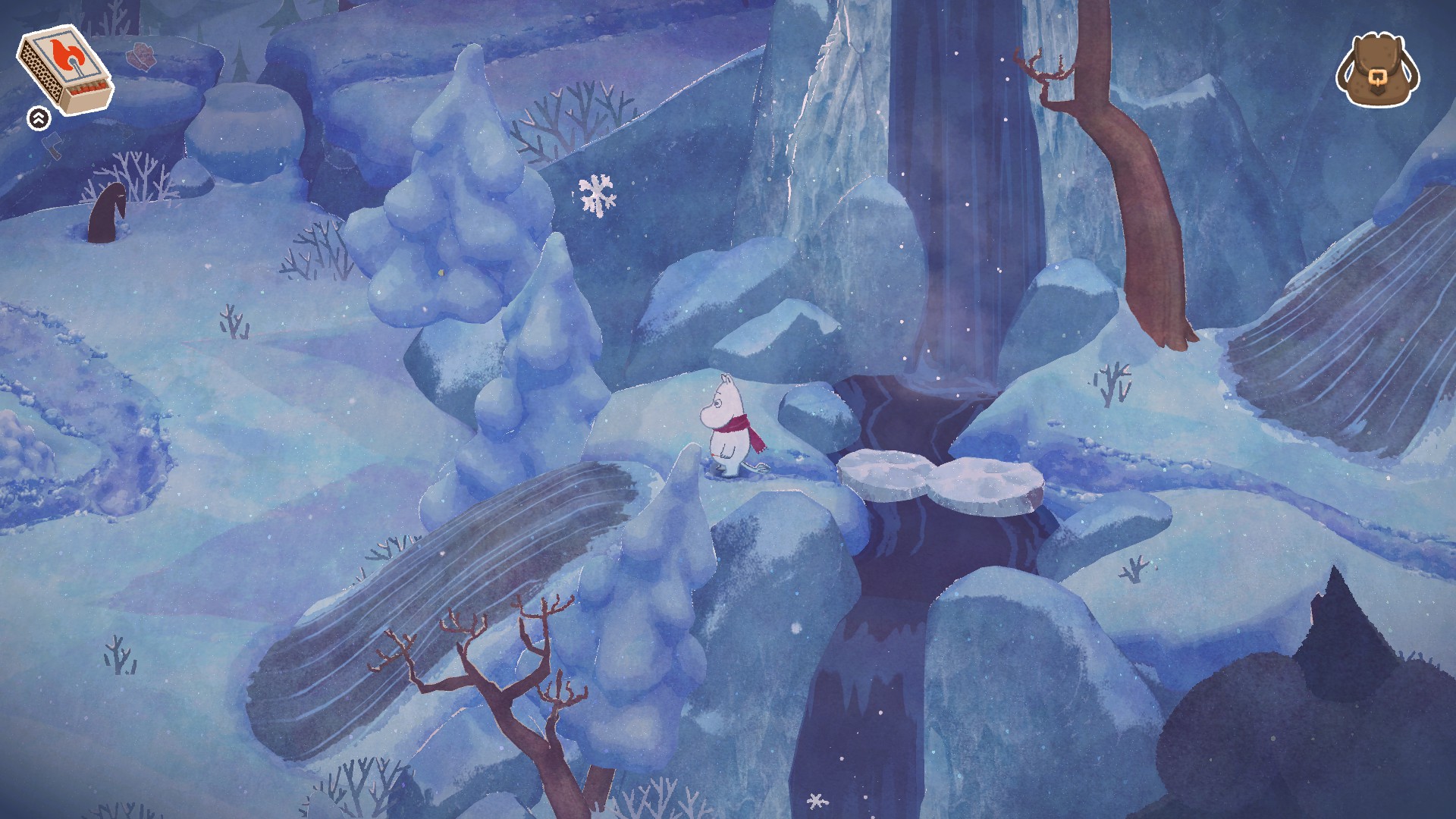
What he finds as an alternative are the clever however cryptic Too-Ticky, who spends the winter within the Moomins’ bathing home; his brash pal Little My, who’s additionally awoken from hibernation however cannot be bothered to be upset by it; and an air-headed squirrel, who instantly runs afoul of the Girl of the Chilly and freezes to dying, horrifying Moomintroll (however not Little My, who makes an attempt to make a muff out of its tail.)
Moomintroll sustains himself with goals of summer season. He finds the winter beings unusual and unhelpful, and their blasé acceptance of his confusion and concern irritating. When he lights the Midwinter bonfire that Too-Ticky guarantees will carry the solar again, and the solar solely returns the subsequent day for a mere few seconds, he is so offended that he instantly opens a forbidden cabinet and lets out his thousand-year-old ancestor. Winter continues anyway, and he meets different odd creatures, and slowly learns the methods of the unfamiliar season.
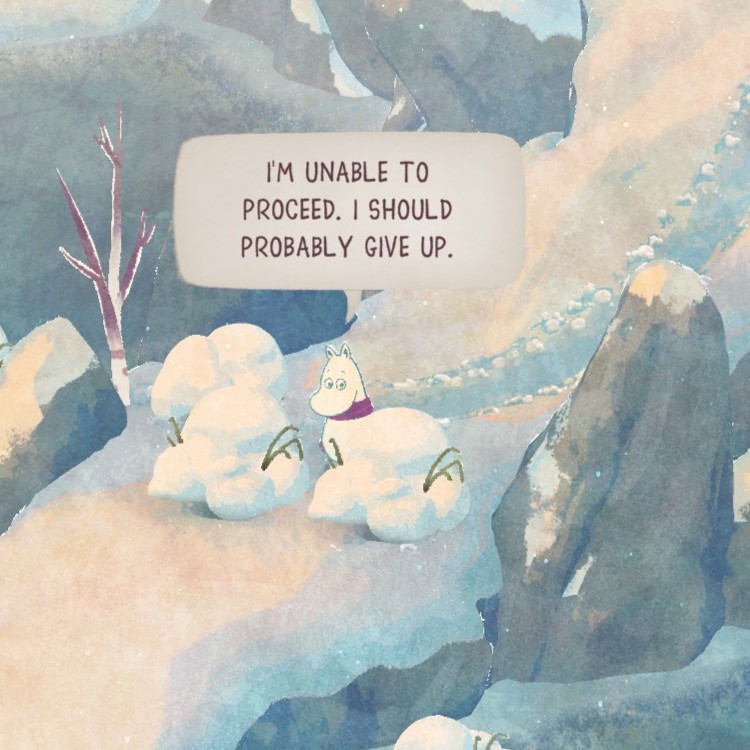
By the tip of the ebook, when Moomintroll falls into the ocean after the ice breaks and the chilly he catches lastly wakes Moominmamma, his time enduring winter has turn into one other thrilling journey.
In some ways the sport follows this loyally. After Mooomintroll wakes up from hibernation, I information him between minor videogame duties (closing home windows, lighting lamps and boilers, discovering damaged vases whose items should be collected). Then I wander out into the world to fulfill the doomed squirrel and Too-Ticky. There are various different characters to come across, minor issues to resolve, and delightful landscapes to discover, however there’s additionally a key distinction from the ebook: the Midwinter bonfire is the climactic occasion, promising to carry again spring, upon which all of Moomintroll’s hopes hinge. As soon as Moomintroll collects roughly 1,000,000 logs and convinces his erstwhile neighbors to point out as much as the celebration, the tip of the sport rolls shortly by.
In Jansson’s story, the Midwinter bonfire takes place (as one may anticipate) in the course of the story. Moomintroll’s disappointment at spring not returning—and his sluggish acceptance of winter as a time of yr with wonders all its personal—are the second act. Actually, the reader spends longer with this weary, cautious Moomintroll than they ever did with the hopeful one.
What to learn subsequent
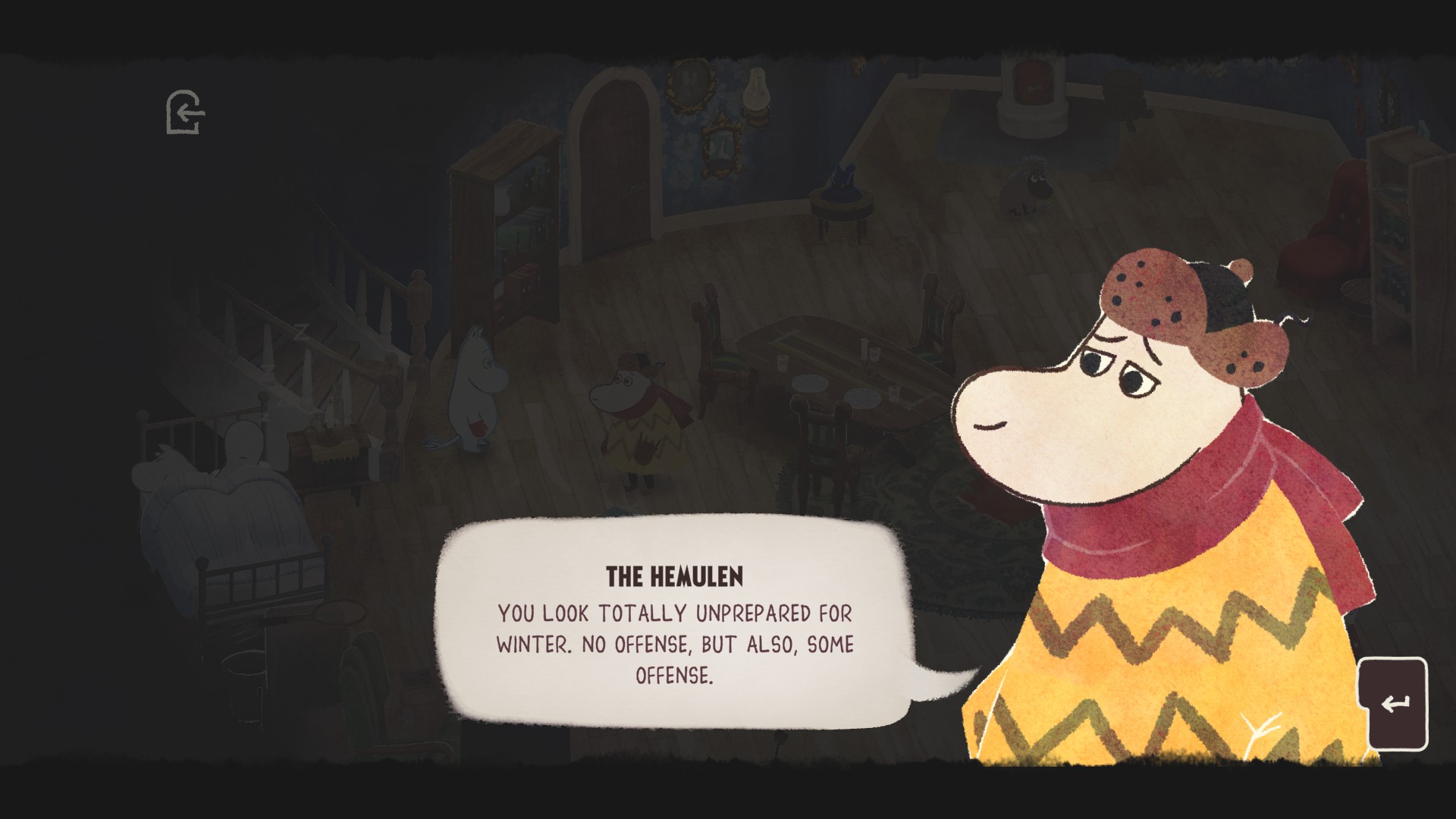
What this does is change the first emotion we witness in Moomintroll within the sport versus the ebook. In Moomintroll: Winter’s Heat, he is motivated by hope primarily based on misunderstanding. The promise of a return to acquainted consolation and a decisive, fast finish to the harshness of winter makes him, for the overwhelming majority of the sport, a decided and dedicated protagonist. His disappointment and anger after the Midwinter bonfire come within the final part of the sport, and spring returns (for the participant, over four-ish hours playtime) pretty shortly.
These two variations of the story have nearly reverse targets
There is a sense that, though Moomintroll is younger and naive, he is additionally proper: justified by the construction of the sport in his perception that he could make spring come via laborious work and helpfulness, and that the discomforts of winter is not going to stick with him for lengthy.
In Moominland Midwinter, his frustration after the bonfire is given far more narrative significance. It isn’t his pluck and bravado in attempting to carry again spring that’s highlighted, however his expertise of disappointment and his persistence regardless of it that turns into the principle takeaway. That is a part of what makes it such an odd learn, particularly as an grownup. It feels somber, a bit tough-love, to observe Moomintroll face the transient fingernail of solar over the ocean and to know that spring cannot be hastened. It additionally feels a bit extra like maturity than the promise that pluck and elbow grease will all the time carry their simply rewards.
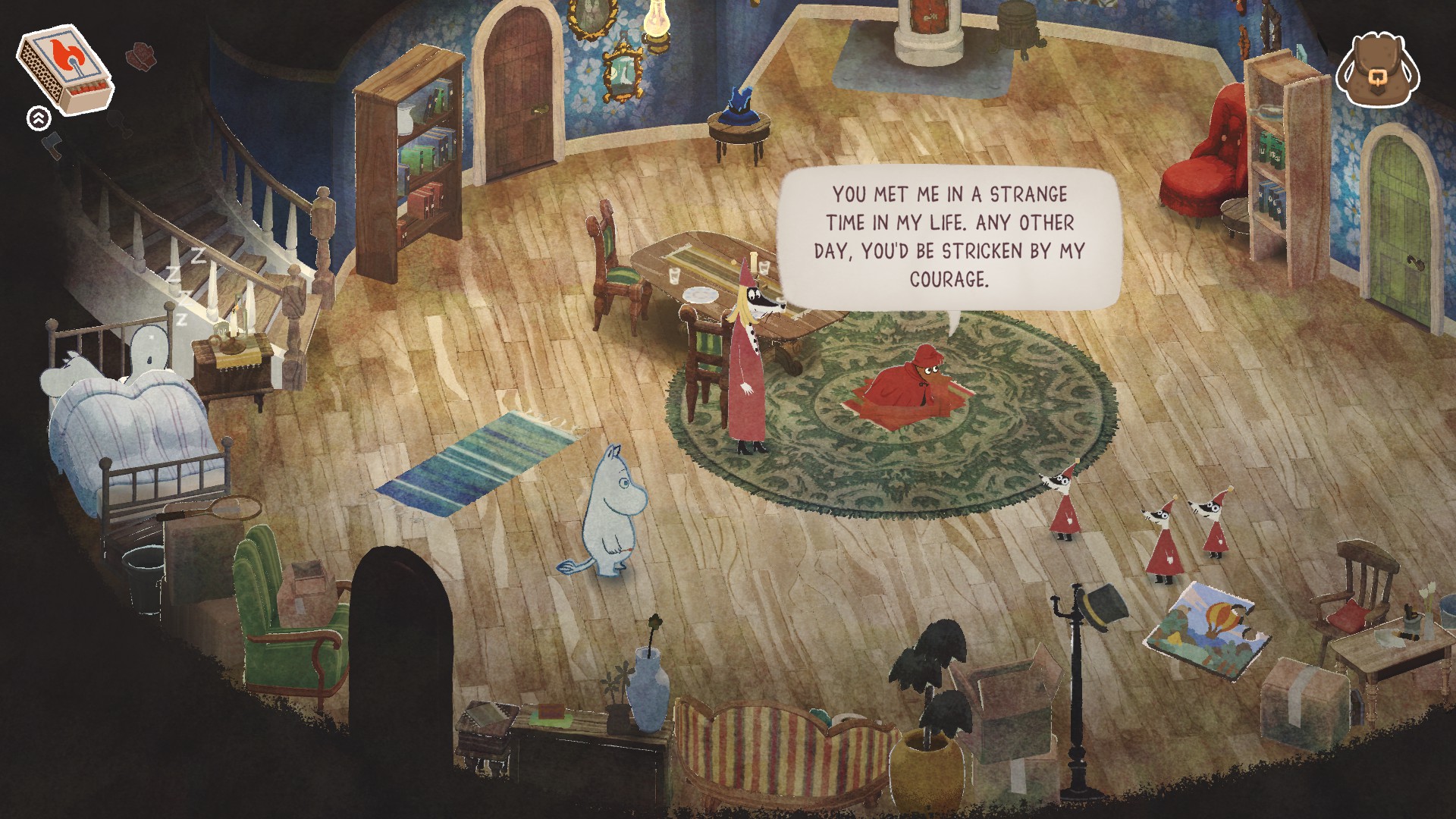
It highlights, unintentionally, that these two variations of the story have nearly reverse targets. A youngsters’s ebook tries to introduce sophisticated feelings in a secure kind, to provide children the abilities to deal with them on their very own. A comfy sport, however, needs to chill out, consolation, and appease. It is essential, within the sport, for Moomintroll (and me) to have an inexpensive quantity of company, and for our encounters to be manageable and result in a great final result, and for him to be a lovely character to observe round. The sense of predictability is essential to the participant; they know that they will make it via winter, in spite of everything, that at some point the solar goes to come back again, and Moomintroll will not be caught within the chilly panorama of uncertainty ceaselessly.
They’re additionally enjoying the sport to chill out, so evoking that feeling of uncertainty via mechanics, whether or not via one thing extra skill-based than light puzzles or via some type of survival system, would undermine the style’s aim of being calm and unstressful.
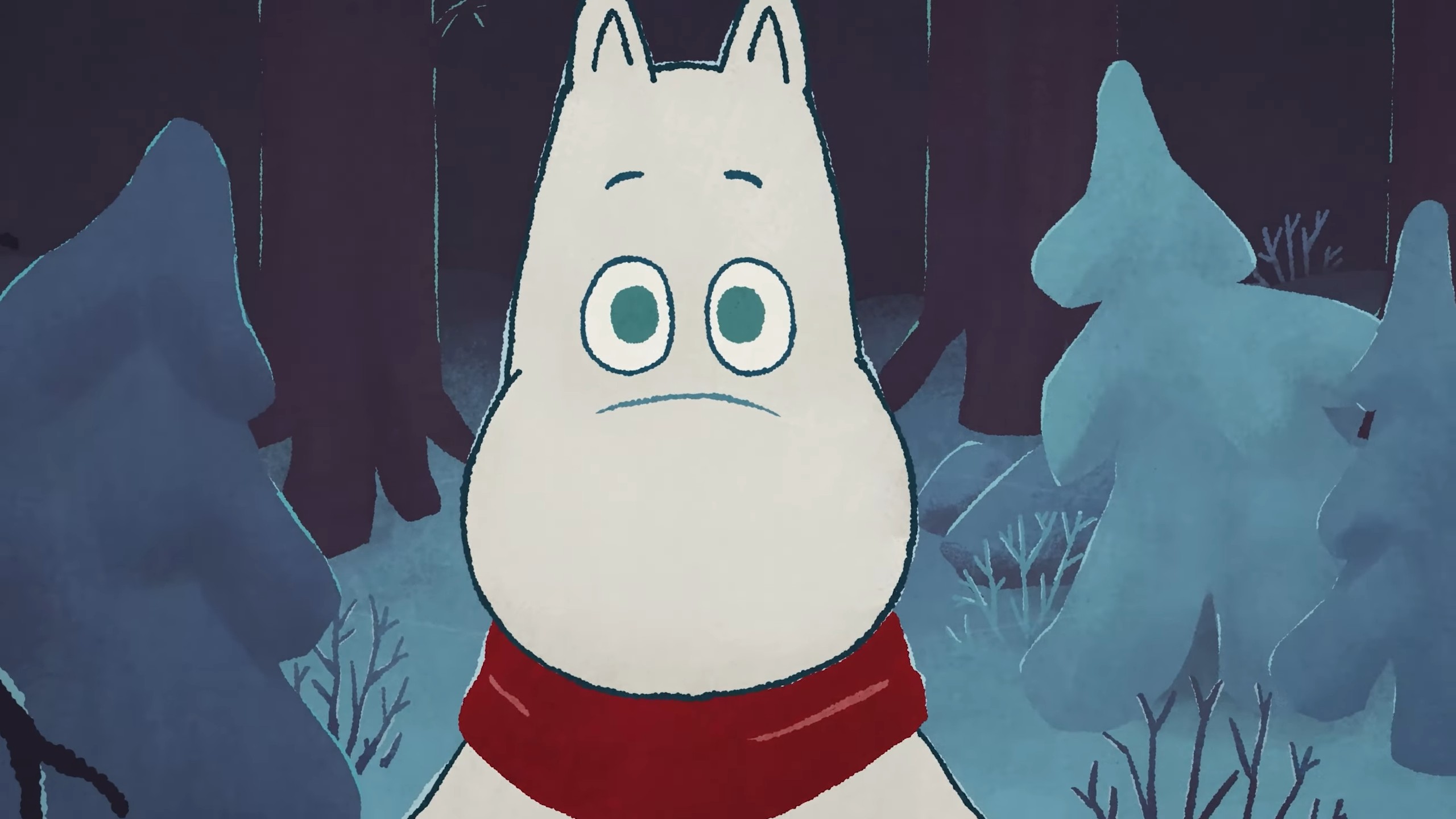
It is a affordable alternative for the sport to make. The participant, in spite of everything, most likely would not wish to be confused: it is nonetheless a videogame, and you have nonetheless acquired to know what to do. Concessions need to be made. Too-Ticky, for instance, is far more of an articulate and affected person mentor in Moomintroll: Winter’s Heat than in Moominland Midwinter: it would offend the sensibilities of players on the lookout for a soothing escape in the event that they struggled their technique to the primary main NPC of their sport and she or he mentioned, as she does within the ebook, “One has to find every thing for oneself, and recover from it on their own.” Rattling, Too-Ticky, alright.
Nonetheless, it is hanging how otherwise these decisions make it land. It is nonetheless the identical story, about Moomintroll waking up alone, fording his method via the winter, and studying a lesson on the finish. It contains most of the similar characters, hits most of the similar narrative beats, and ends in the identical place, with the devoted return of the solar. However studying Moominland Midwinter, whilst an grownup, exposes you to troublesome feelings—nervousness, concern, frustration, confusion, anticipation—after which encourages you to sit down with them as winter rolls slowly via its phases.
Moomintroll: Winter’s Heat (which is now out on Steam) would not spend practically as a lot time there. It will probably’t; in any other case it would not be cozy.
The outcome is a reasonably devoted adaptation that nonetheless sharply deviates in emotional tone, deemphasizing the uncertainty, disappointment, and anger that had been outstanding within the ebook. It as an alternative emphasizes Moomintroll’s company and intentional function in serving to the denizens of Moominvalley make it via winter. Whereas it could have been attainable to design a sport across the extra uncomfortable features of Moomintroll’s journey, that might pull Moomintroll: Winter’s Heat away from its genre-defined targets of evoking security, abundance and softness.
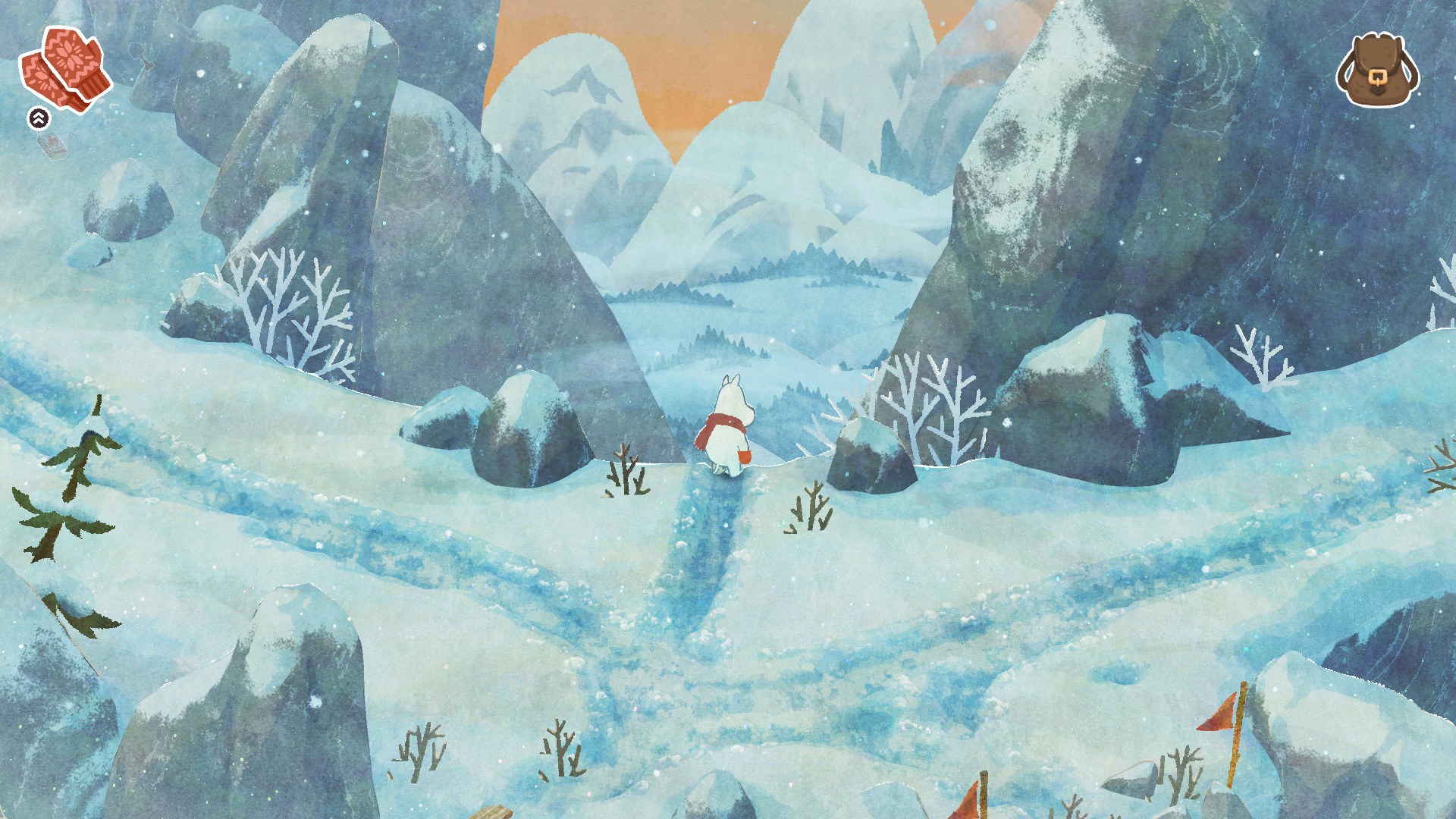
Neither of those are the fallacious method. Moomintroll: Winter’s Heat is a beautiful sport, and I actually do not suppose it could be carrying out its targets any higher if you happen to spent the entire time following round a confused and unhappy Moomintroll. It does precisely what it units out to do: reassures the participant, and Moomintroll, that with laborious work, friendship, and bravado, spring will come. It additionally exposes the contradictory nature of adapting a narrative from a youngsters’s ebook, one meant to problem and disrupt inside a secure surroundings, to a comfortable sport, which is meant to calm and reassure, to offer a dependable supply of spring inside the insistent winter of recent life. It is a comforting message, simply barely totally different from the one Jansson wrote, which centered on adversity and discomfort not as the issue however as the purpose:
However the Snork Maiden had come throughout the primary courageous nose-tip of a crocus. It was pushing via the nice and cozy spot below the south window, however wasn’t even inexperienced but.
‘Let’s put a glass over it,’ mentioned the Snork Maiden. ‘It will be higher off within the night time if there is a frost.’
‘No, do not do this,’ mentioned Moomintroll. ‘Let it combat it out. I consider it will do nonetheless higher if issues aren’t really easy.’


