
Arm versus x86 is a battle for the ages. And 2025 was meant to be the yr that Arm chips lastly made inroads into the PC and certainly PC gaming. That ought to have been due to Qualcomm’s Snapdragon X CPU, which seemed very promising at launch and should have been stepping into its stride this yr.
That clearly hasn’t occurred. And but there are a number of unambiguous indicators that the Arm revolution on the PC might be imminent. Sure, for actual this time. What’s extra, trendy Arm CPUs look very compelling on paper. With regards to single-core efficiency, all of the indications are that they’re really superior to x86. And single-core efficiency is especially vital for gaming.
Associated articles
The emulation recreation
So, the place precisely are we with regards to Arm on the PC and significantly gaming on Arm? For now, Qualcomm is the one main participant in Arm chips for the PC, although Apple’s M silicon is related, too, and Nvidia is actually nearly to get in on the sport, extra on which in a second.
Qualcomm’s Snapdragon X Arm CPUs for the PC had been launched in spring 2024 with some very daring guarantees concerning gaming efficiency. Undoubtedly, that gaming pitch from Qualcomm was a giant mistake and set expectations that had been by no means going to be met.
The issue was and is multifold. Firstly, and maybe most significantly, there are only a few correct PC video games which might be compiled natively for Arm chips. Meaning gaming on Arm PCs proper now means emulating x86 code on Arm CPU cores.
That, in flip, means Qualcomm relies on Microsoft and its Prism emulation layer for Home windows on Arm. The opposite main limitation is that Qualcomm’s Snapdragon X chips are basically low-power cell SoCs with built-in graphics.
To chop a protracted story brief, the Adreno GPU within the first era Snapdragon X chips is not horrible. However even by the requirements of built-in graphics, it gives first rate reasonably than outstanding uncooked rendering energy.
In comparison with correct desktop graphics, it is nowhere, and that is earlier than you consider help for contemporary options like upscaling and body era. Stepping into PC graphics nowadays is a really powerful gig. Simply ask Intel.
After all, that is all theoretical {hardware} efficiency. In observe, the necessity to emulate x86 video games places a efficiency overhead on high and in addition means that you could’t simply assume a given recreation goes to run, in any respect.
Associated articles
Home windows on Arm upgrades
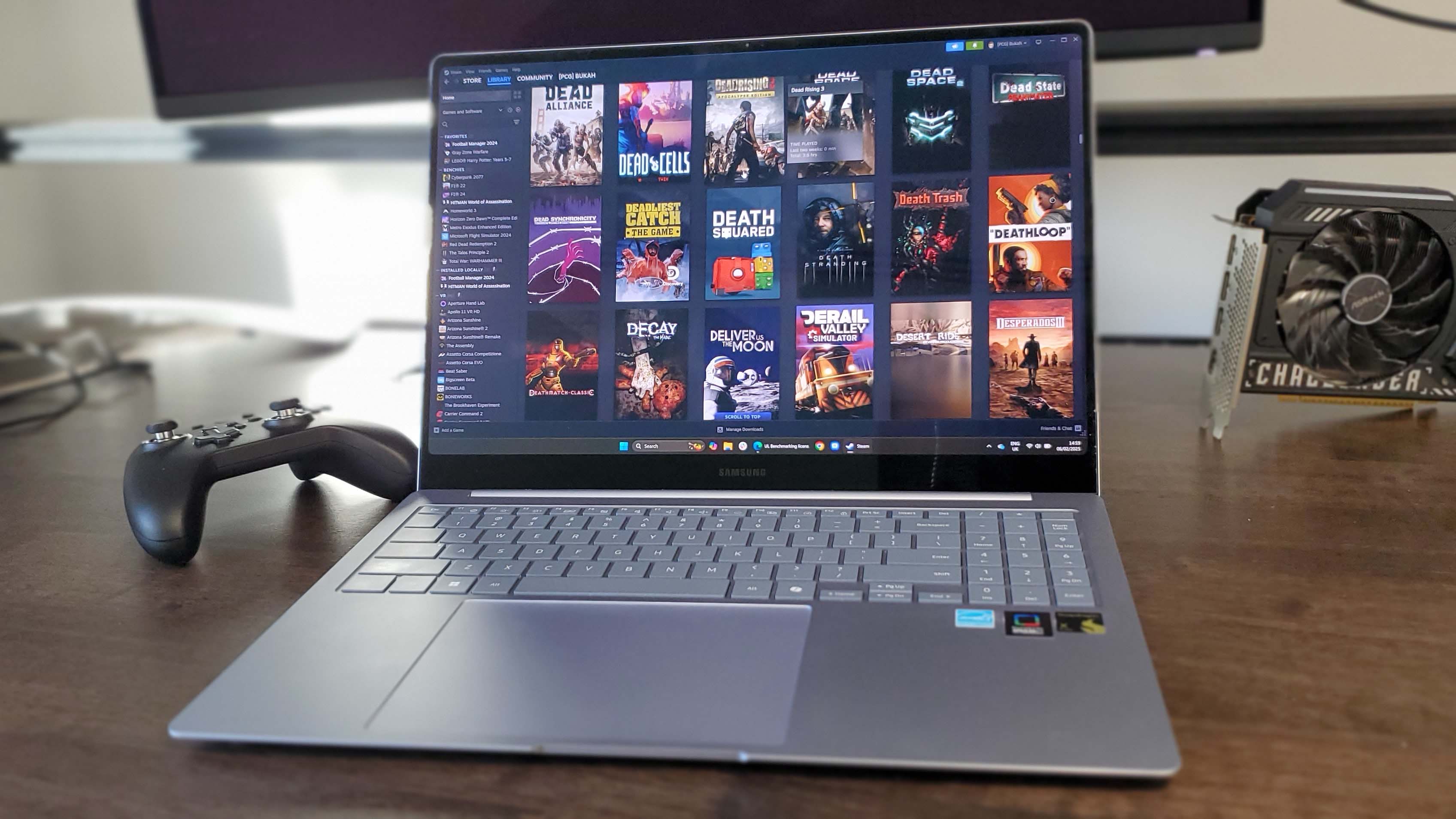
Early recreation help was duly very patchy. Nevertheless, on the finish of 2024, Microsoft launched a serious replace for the Prism emulation layer which added in help for options like AVX and AVX2 directions, that are utilized by some video games and had been stopping some titles from operating.
As we discovered earlier this yr, the result’s that the majority video games will now run. However the expertise stays patchy. There’s big record of PC recreation compatibility for the Qualcomm Snapdragon X platform right here. However what’s arguably most fascinating is that even video games listed as operating “completely” can endure from distinctly variable body charges.
Microsoft has additionally added native anti-cheat help to Home windows on Arm, a vital function for on-line gaming. For now, it is restricted to the Simple Anti-Cheat platform in collaboration with Epic and Qualcomm Applied sciences. So, video games like Fortnite can now be performed on Qualcomm Arm PCs. It is actually a step in the best path.
Subsequent-gen Arm chips
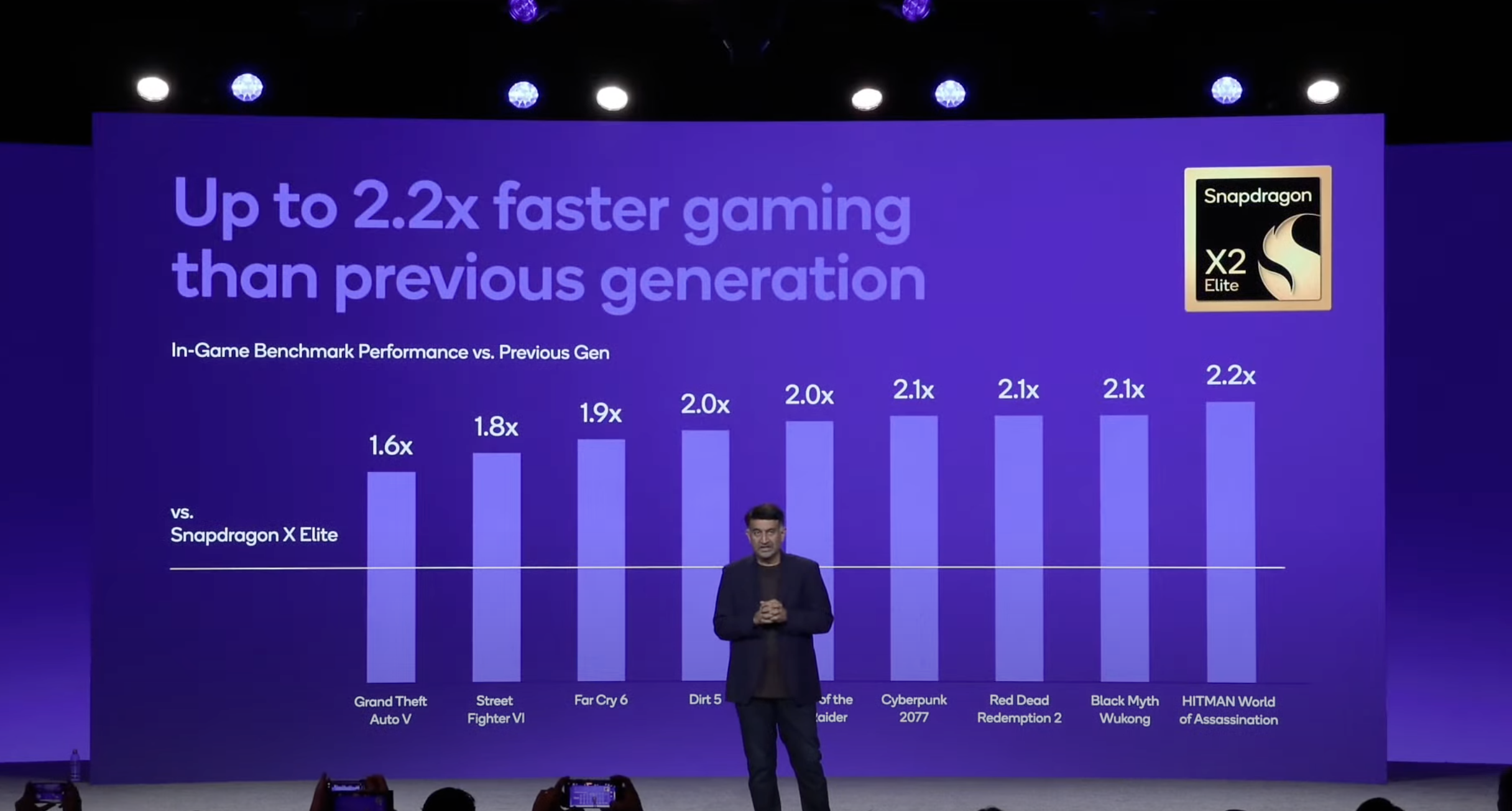
Qualcomm introduced its second era Snapdragon X2 CPUs just a few months in the past and, sadly, it does not appear to be vital classes have been realized. As soon as once more, Qualcomm has been bigging up the chip’s gaming prowess, claiming that it brings “Snapdragon’s largest advance in PC gaming.”
However the X2 remains to be a low-power cell chip with built-in graphics. And it’ll depend on the identical Prism emulation layer because the OG Snapdragon X.
In the long term, then, two issues have to occur. First, video games should be compiled to run natively for Arm chips. Second, we want some correct Arm PC platforms which help discrete graphics playing cards, whether or not that is cell or ideally desktop.
However this is the factor. Arm CPUs may effectively be well worth the wait. Evaluating Arm CPU core efficiency to conventional x86 chips is not simple. However the place it may be accomplished, the most recent Arm cores look very aggressive.
Certainly, it is possible that Apple’s newest Arm CPU cores in its M5 chip provide by far one of the best single-core efficiency available on the market. And Qualcomm’s Snapdragon X2 seems to be prefer it’s an in depth second. In different phrases, each possible provide superior per-core efficiency to any Intel or AMD CPU. At the very least they do operating native code.
Nvidia enters the chat
The opposite large wild card in all that is Nvidia. Lately, Nvidia confirmed that its upcoming Arm chip for PCs is identical because the GB10 superchip within the DGX Spark AI field.
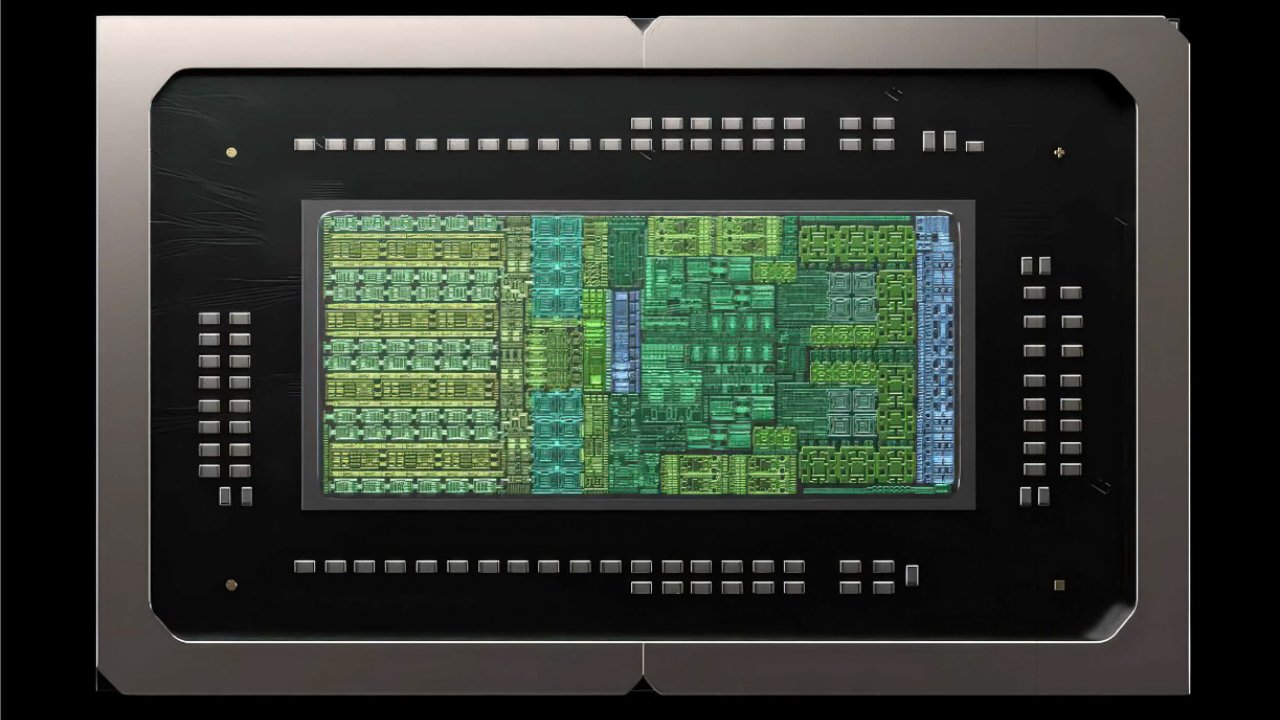
Now, that does not essentially imply that Nvidia’s PC chip could have precisely the identical specs. However it would nonetheless very possible provide by far essentially the most highly effective graphics of any Arm platform and certainly any APU for the PC, together with AMD’s Strix Halo chip. The GB10 superchip has an built-in CPU with basically the identical specs as a desktop RTX 5070 graphics card. That is fairly thrilling.
The catch is that Nvidia faces the identical recreation compatibility hurdles with its Arm CPUs as Qualcomm. Really, these hurdles could possibly be worse.
The GB10 chip runs off-the-shelf Arm CPU cores, not customized cores like Qualcomm and Apple, together with 10 Cortex-X925 efficiency cores and 10 Cortex-A725 effectivity cores.
The factor is, each Qualcomm and Apple Arm chips have options baked into the {hardware} to assist x86 code run effectively, together with lodging for the way x86 handles reminiscence storage. So far as I’m conscious, Arm’s Cortex cores shouldn’t have that.
What’s extra, up to now Microsoft’s Prism emulation layer for Arm on Home windows has actually been an Emulation layer for Snapdragon X on Home windows. It can completely should be reworked for any Nvidia Arm CPU. Both that or Nvidia must do its personal emulation layer.
After all, if any firm has the assets to push all that by way of, it will be Nvidia, the world’s most respected company. However my overarching level right here is that it appears unlikely that Nvidia’s first Arm chip within the PC will probably be killer for gaming, regardless of the promise of very highly effective graphics.
The excellent news is that Nvidia has really introduced a next-gen CPU structure for its AI platform, referred to as Vera, that sports activities custom-designed CPU cores with a lot larger efficiency.
For now, there’s completely no indication whether or not these cores are destined for the PC or in the event that they help devoted {hardware} for emulating x86 code. Nevertheless, what is evident is that Nvidia has engineers designing Arm cores and that’s actually vital.
Valve’s getting in on Arm, too
Apart from Nvidia, one other attainable large participant in all that is Valve. Sure, its new Steam Machine is a conventional x86-based machine. However the brand new Steam Body VR headset is an Arm-powered machine, once more with a Qualcomm chip, albeit a Snapdragon 8 Gen 3 mannequin associated to its smartphone SoCs versus the PC-centric Snapdragon X.

Anywho, the consequence is that Valve has created SteamOS for Arm with its personal x86 translation layer referred to as FEX. Jacob spoke with Valve’s engineers about this thrilling venture in November.
It is clearly very early days for Steam OS on Arm. However the mere indisputable fact that an organization as vital to PC gaming has developed a brand new gaming OS particularly for Arm chips is critical. It very a lot provides to the momentum.
Pencil in 2028 for PC gaming on Arm
All of which leaves us with the query of when this Arm revolution for the PC will really occur. Frankly, 2026 seems to be unlikely. Qualcomm’s second-gen Snapdragon X2 chip seems to be fairly good. Nevertheless it hardly has the makings of a gaming revolution.
Likewise, there are query marks over Nvidia’s first Arm chip in a PC gaming context. So, I would say we have to look to 2027 or extra possible 2028 and, hopefully, a second-gen Nvidia Arm chip with {custom} x86-optimised CPU cores. If that occurs, the scene will certainly be set for what could possibly be the ultimate battle between Arm and its historical rival, x86.
Greatest CPU for gaming 2025
All our present suggestions


