
The 2007 season finale of TV phenom Misplaced ended with an all-timer twist: What had appeared just like the present’s routine flashback storyline, filling within the occasions that preceded its characters ending up in island purgatory, was really a flash ahead. Protagonists Jack and Kate have been one way or the other secure in Los Angeles after three seasons of being caught on the mysterious island. Escaping had been the entire level of the present—or so we thought, till a damaged Jack cried “We now have to return!”
That is now how I really feel about, frankly, a whole lot of expertise. Not lengthy earlier than that episode aired I would gleefully dropped $1,000 on my first HD show, a 26-inch 1366×768 Samsung LCD that served as my faculty dorm TV and doubled as my pc monitor. For the time it was state-of-the-art, a lot thinner and sharper and higher than the CRT monitor nonetheless connected to the household PC.
Or was it?
Newest Movies FromPC Gamer
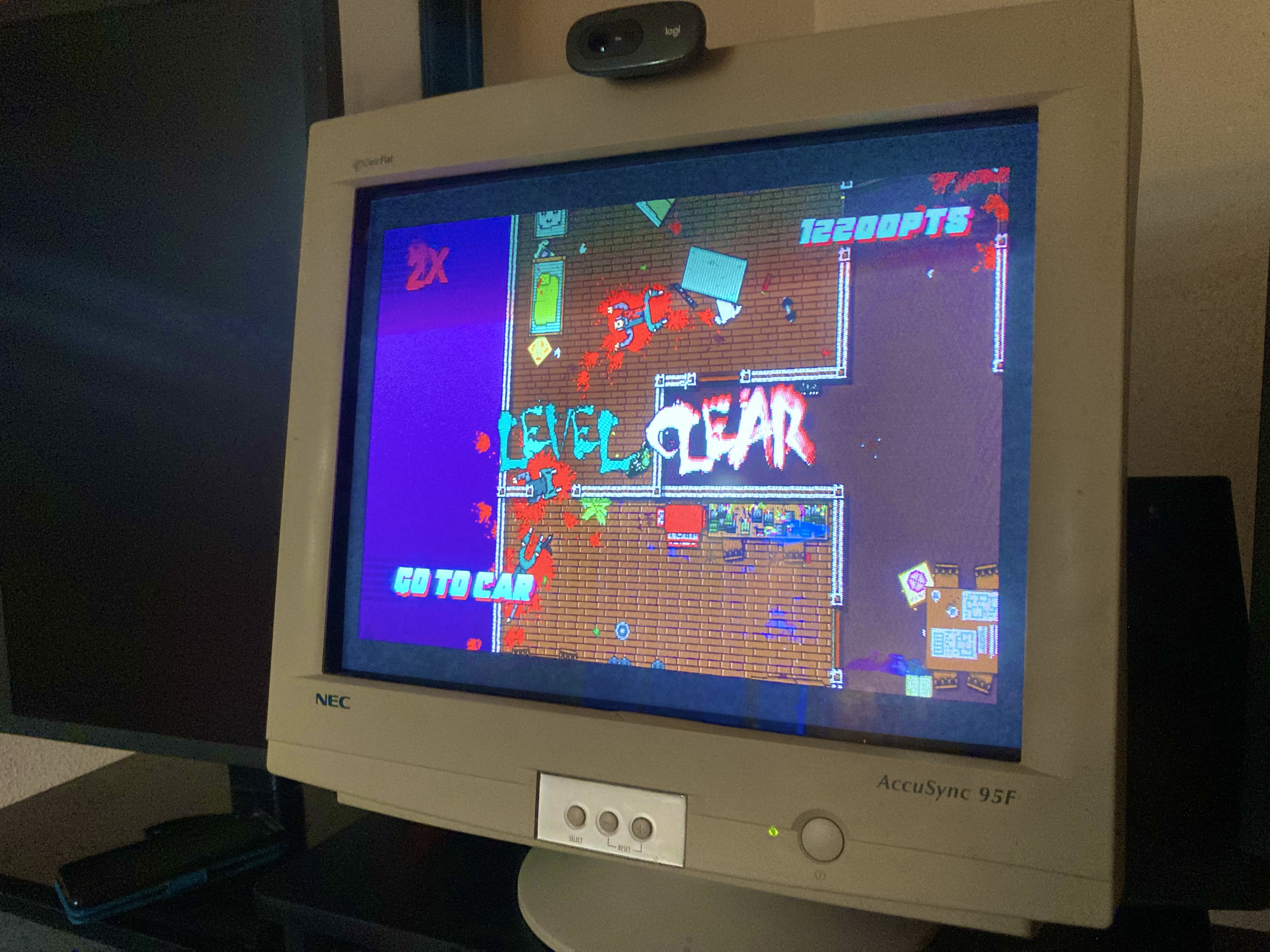
Twenty years later, consultants who’re tuned into the minutia of show tech are nonetheless making an attempt to get again what we misplaced.
“Folks older than 40 will usually keep in mind the movement readability of CRTs, whereas youthful individuals who’ve by no means seen a CRT won’t keep in mind,” says Mark Rejhon, founding father of the web site Blur Busters. For years, Blur Busters’ “Check UFO” browser software, starring slightly inexperienced man in a pink saucer, has served because the de facto approach to choose the readability of objects in movement on fashionable shows. In comparison with older CRT screens, the LCDs of the mid-2000s have been significantly horrible, their pixels taking an eternity to vary from one coloration to a different and leaving a nasty “ghost” path on fast-moving photos.
You might like
The TV I spent a complete month’s paycheck on was higher than common for its day, however the novelty of the HD period made me overlook then what’s much more apparent now: the richer colours and smoothness of a CRT that I gave up, and would not get again for practically twenty years.
At this time’s excessive refresh screens are much better than the smeary, washed out LCDs of the 2000s—however even the perfect of the perfect are nonetheless chasing the readability of CRTs, which suggests Rejhon is chasing it too.
Cathode ray ‘tude
Pulse Test
Whereas ShaderBeam tries to eradicate movement blur in software program, Nvidia’s tackling it in {hardware}. G-Sync Pulsar (constructed into a variety of gaming screens this yr) works with VRR and makes use of backlight strobing plus a rolling top-to-bottom refresh cycle, very like a CRT, to create a “perceived readability” of 1,000 Hz. No OLEDs but, although, and the tech is in fact locked to Nvidia GPUs.
In late 2024 Rejhon debuted a “breakthrough algorithm for simulating a CRT tube” alongside former Nvidia developer Timothy Lottes, which takes benefit of 240+ Hz shows to drastically cut back seen movement blur in retro video games and different content material that is locked at 60 Hz.
The trick, to grossly simplify some extraordinarily difficult tech, is recreating the visible “phosphor fade” of a CRT, which is gentler on the eyes and fewer flickery than harsh black body insertion (BFI), the earlier go-to methodology for slicing down on blur as pixels swap from one coloration to a different.
“The 2 fundamental methods to cut back show movement blur is both flicker the frames (like a CRT) or add extra body price (for top Hz),” Rejhon mentioned. “Each strategies will present frames extra briefly, like a quick digicam shutter, and lead to much less show movement blur. CRTs may flicker pixels brightly for lower than 1/1000 second. The bonus with CRT is you don’t require extra body price to realize low movement blur.”
What to learn subsequent
(Picture credit score: Future)
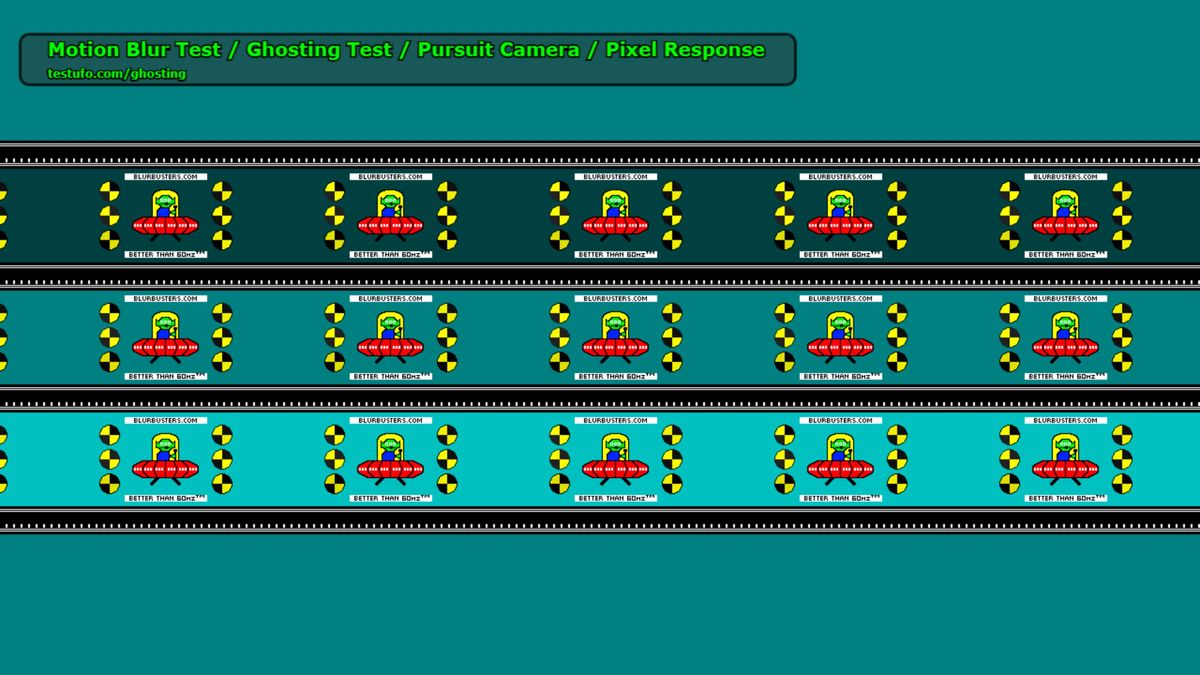
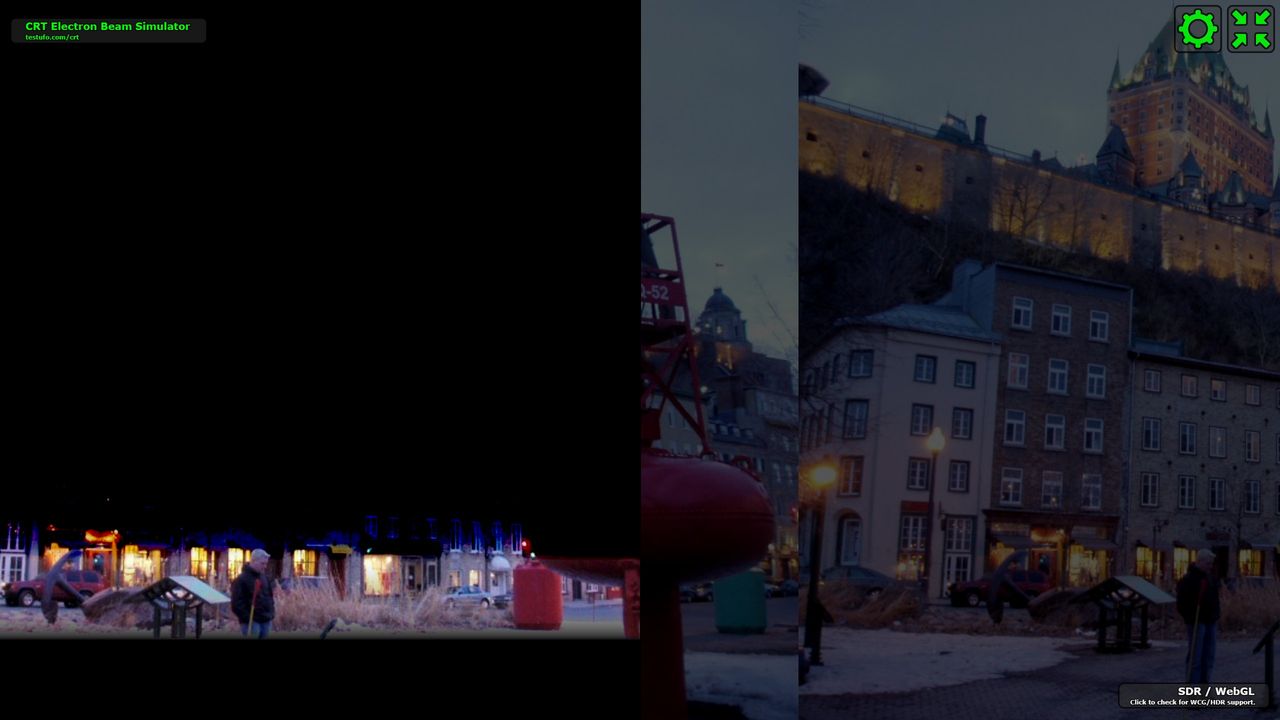
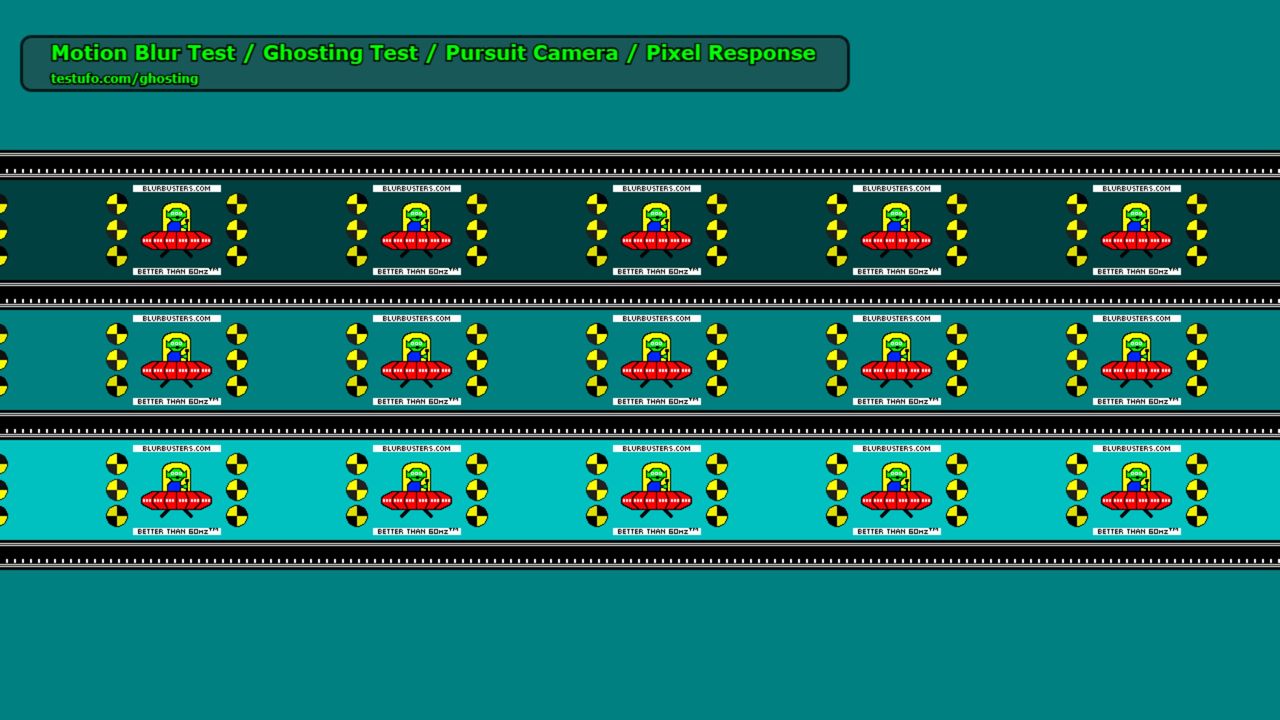
If that is nonetheless powerful to wrap your mind round, consider the CRT simulation as DLSS, however for movement as a substitute of decision: When it is working excellent, a sport locked at 60 frames per second may look simply as clean and clear as one operating at, say, 540 frames per second, without having an RTX 5090 to hit these numbers.
540 Hz is the refresh price of the ROG PG27AQWP-W Asus despatched me for testing, a great monitor for getting essentially the most out of CRT simulation. It even has a 720 Hz mode when you drop the decision to 720p; and the upper the refresh, the extra you possibly can cut back the perceived movement blur. In contrast to LCDs, OLED panels can go fully black (there is no backlight to bleed gentle) and get extraordinarily vivid, getting a lot nearer to the distinction CRTs naturally supplied. And the excessive refresh price helps recreate the electron beam that may journey down a CRT display to “draw” the picture.
This impact is not only a nostalgia factor: As Rejhon notes on BlurBusters, “60 Hz BFI and strobing sparkles rather a lot” since you’re flashing a black body in between every one out of your sport. By comparability, the top-to-bottom scanning impact is much less harsh: “CRT simulation is way gentler for 60 fps content material, due to phosphor fade & rolling scan. Some gentle is emitted someplace else on the display on a regular basis.”
Regardless of the proper {hardware} to check on, although, CRT simulation is so bleeding edge I virtually sliced my mind to ribbons making an attempt to get it working earlier this yr.
The very first implementation of BlurBusters’ tech was in a shader for the emulation frontend Retroarch, however quickly after it was constructed into an experimental department of a standalone app referred to as ShaderGlass, an important overlay for Home windows that allows you to apply tons of of visible results to no matter’s in your desktop—scanlines, the fuzziness of an analog video sign, and so forth. However the CRT beam simulation is a lot extra complicated than a typical video shader, app developer Mausimus determined to separate it off right into a separate software: ShaderBeam.
“The best utility of beam simulation expertise requires excellent synchronization with each the show (it can’t afford to drop a single body even at these excessive refresh charges, since that causes very noticeable flashing) and enter content material (for aligning supply body technology with simulated CRT refresh price),” mentioned Mausimus. Proper now, it is the easiest way to make use of Rejhon’s algorithm.
Shader goals
Watch On
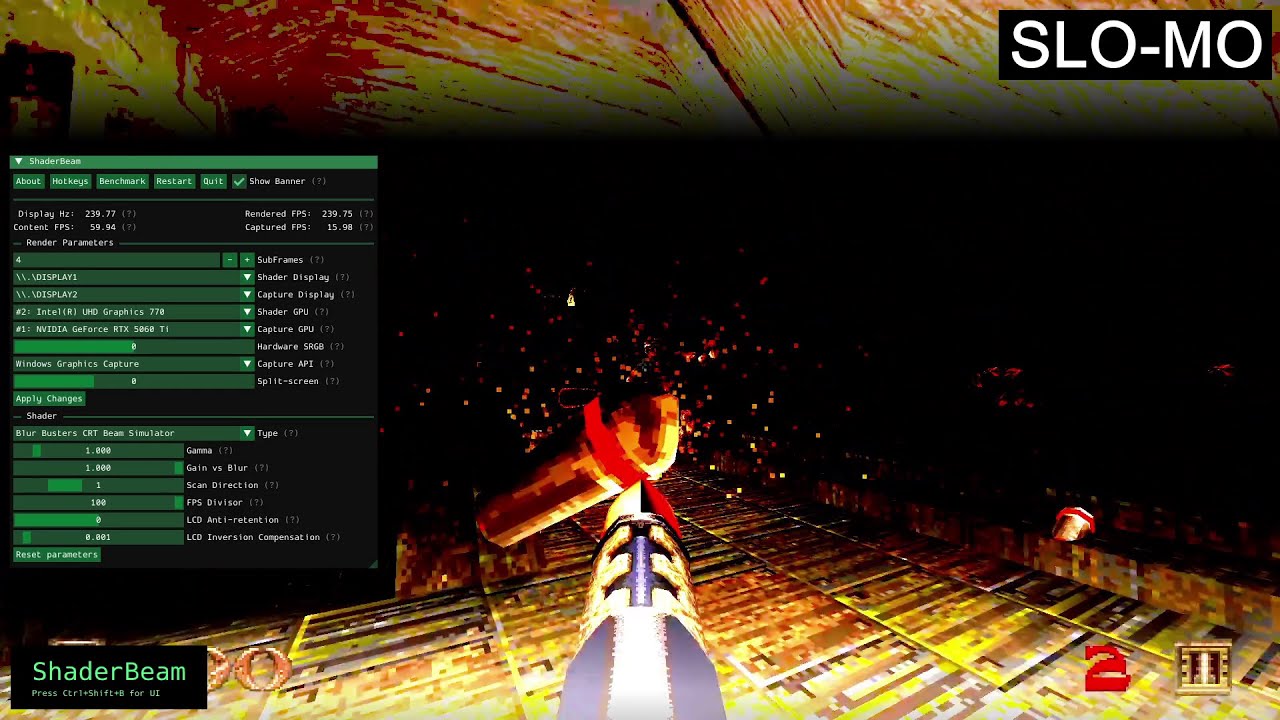
ShaderBeam would not contain a lot setup: launch its executable and use a hotkey to use the shader on high of a sport window. How easy it appears belies how arduous the visible impact is to drag off when you do not work at Microsoft, AMD or Nvidia.
“ShaderBeam tries to make use of no matter’s out there, like display seize and window transparency (though these applied sciences weren’t designed with this use case in thoughts in any respect and supply no timing ensures in anyway), to compensate for the shortcoming to insert itself into the rendering pipeline from supply content material to show,” Mausimus mentioned. “It is on the mercy of opaque scheduling algorithms constructed into the OS and GPU drivers, hoping it could eke out sufficient assets to take care of its timing.”
The best ShaderBeam setup entails disabling normal niceties like VRR, turning off all types of options in your graphic’s playing cards driver settings, unplugging secondary screens, utilizing Course of Lasso to offer it larger precedence, and even a registry edit. It contains the novel thought of splitting up the duties of rendering the sport and the CRT shader to 2 GPUs. In case your processor has a built-in GPU, utilizing it could assist keep away from a desync between the speed at which your sport is spitting out frames and the speed at which ShaderBeam can apply the CRT beam simulation.
“By transferring beam simulation to a different GPU there may be much less rivalry for the first GPU’s time and successfully higher scheduling consistency; it does present a way more secure expertise,” Mausimus mentioned. “The problem with single GPU is not lack of GPU energy, somewhat its unpredictable distribution.”
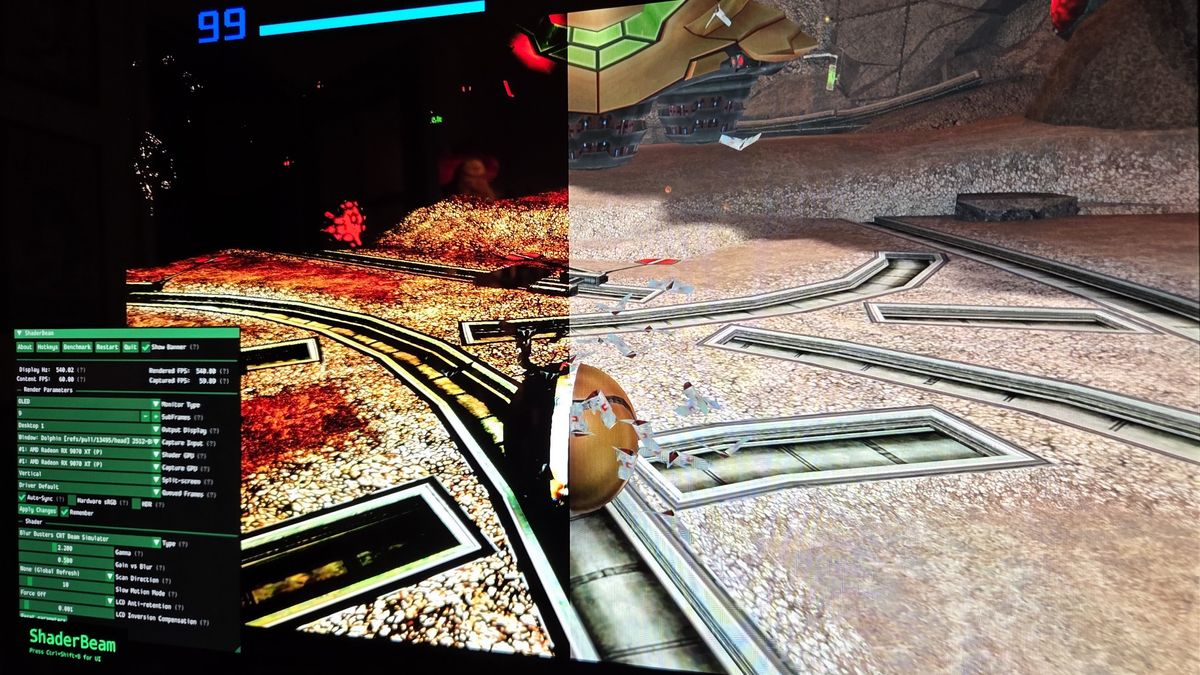
(Picture credit score: Future)
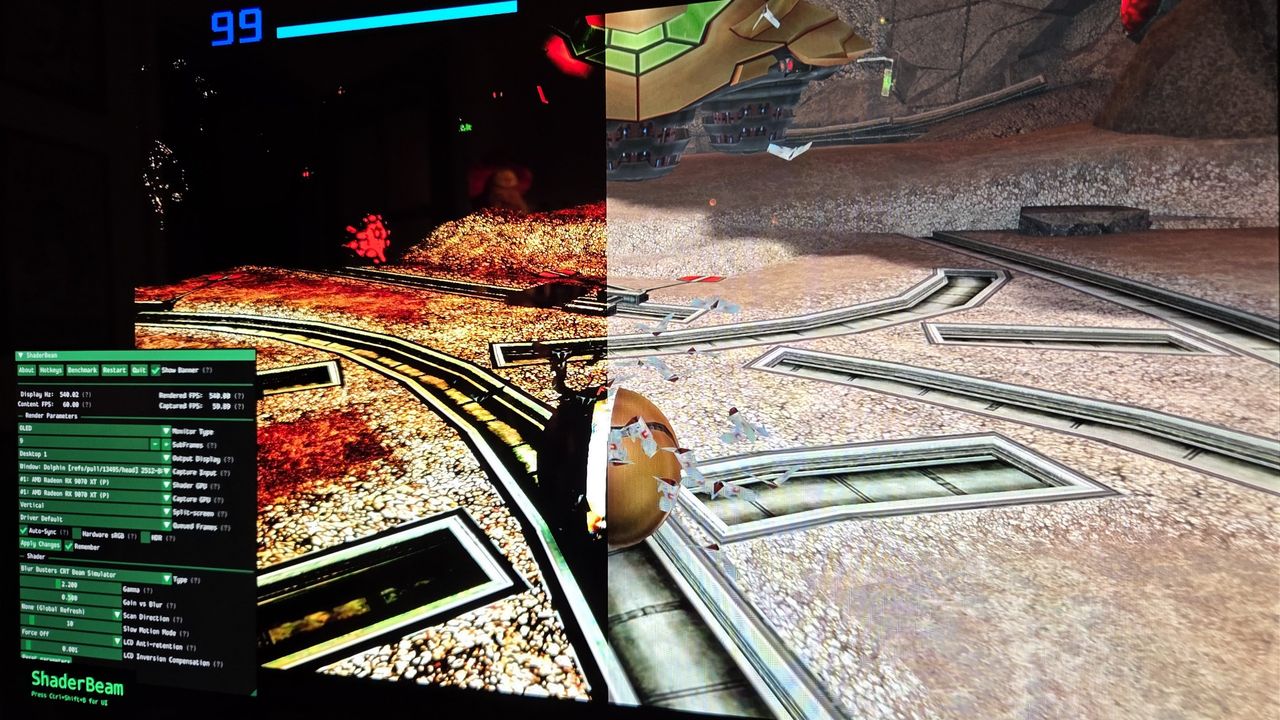
If ShaderBeam “is not given sufficient GPU time by the OS to current a body on time,” you may expertise some flashing—which I found by pushing my Intel chip’s iGPU to output at 1440p at 540 Hz. Then I struggled by constant stuttering whereas making an attempt ShaderBeam with varied emulators and shooters like Quake and Amid Evil, which led me down the rabbit gap of show subframe timing, the place the minutia of monitor expertise rapidly turns into increasingly more arcane.
This all would possibly sound like a borderline deranged quantity of effort simply to play a sport like Nintendo’s Metroid Prime 2: Echoes in GameCube emulator Dolphin, one among my check instances, the best way I first noticed it on the CRT in a highschool pal’s bed room. I felt like a mad scientist (emphasis on the mad) whereas making an attempt to troubleshoot stutters, flicker, and coloration banding for hours on finish.
Even when every little thing is calibrated excellent, there’s additionally the likelihood a sport itself can throw a wrench in issues—Unreal Engine 5’s penchant for stuttering will naturally throw off the body pacing of the CRT simulation, too, for instance.
However after I began rolling Samus’s morph ball in a good circle and realized the room’s columns remained pin sharp even because the digicam whirled round, I bought a glimpse of what Rejhon and Mausimus have been preventing for. “On transferring objects (or the scene when you go searching) the shader ought to mean you can see the person pixels; usually all of them simply get blurred out,” Mausimus mentioned, utilizing the intricate textures on a Quake column as a first-rate instance. Factorio is one other good check case: “It has this actually clean motion of the entire scene if you stroll round with out the shader, the pixels get blurred collectively, however with the shader it’s best to nonetheless be capable to see the main points even when transferring.”
Exhausting Locked
On high of an enormous library of 60 Hz console video games, these PC classics would profit from CRT simulation.
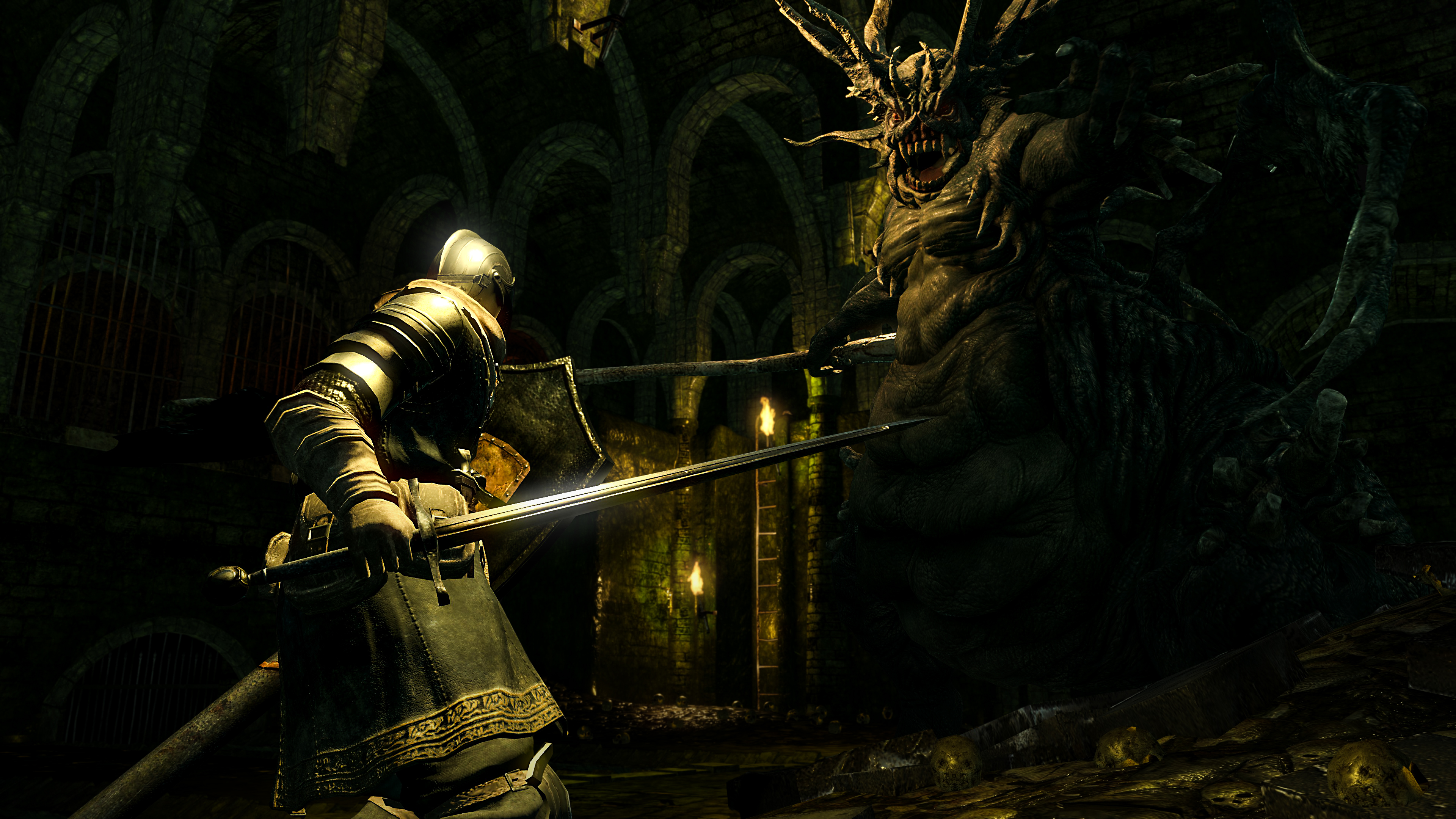
Darkish Souls: Remastered
It took till Armored Core 6 for FromSoftware to supply 120 fps help.

Sonic Racing: Crossworlds
A 2025 racing sport capped at 60 fps? No rushing tickets for Sonic, I suppose.

Nier: Automata
An motion sport this good begs for an uncapped framerate. Alas.
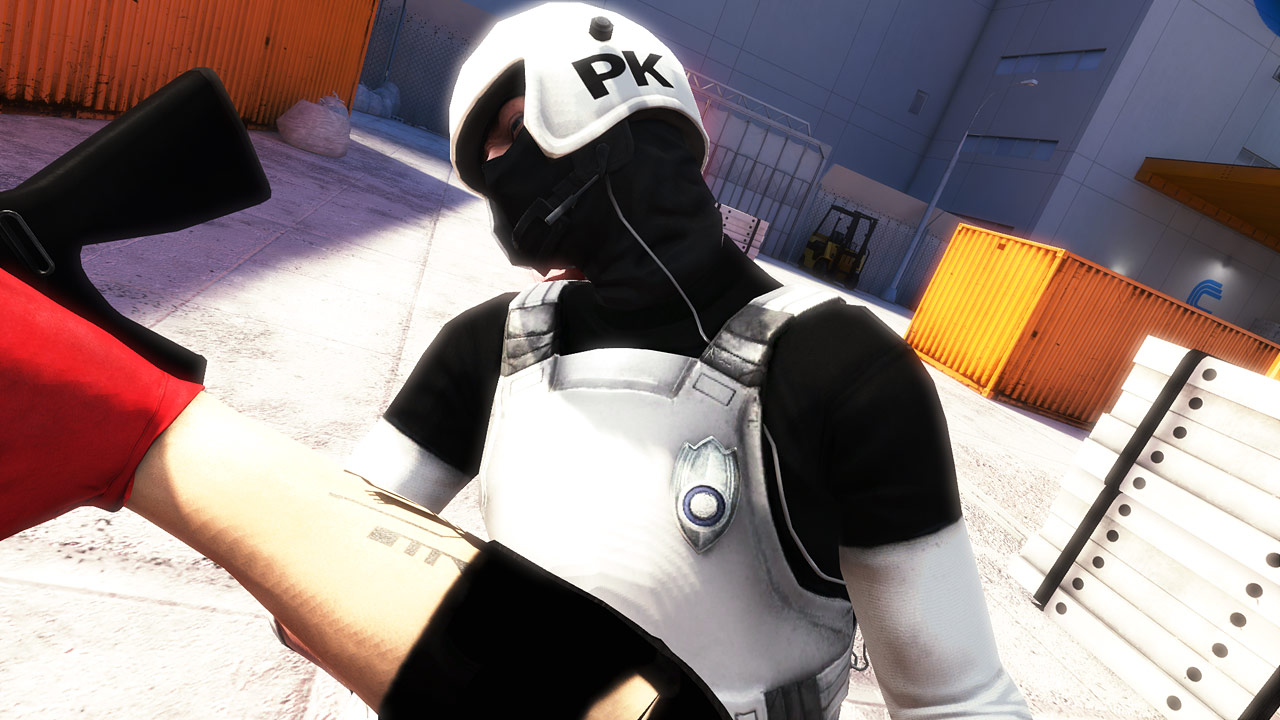
Mirror’s Edge
Tweaks exist to uncap Mirror’s Edge, however the physics get wonky. Its gleaming cityscape deserves the readability of a CRT.
It nearly feels uncanny as soon as your eyes decide up on particulars that may usually be only a blur—the distinction is as dramatic as switching to a better refresh price in a sport you’ve got solely ever managed at 30 fps. Nevertheless it’s frustratingly tough to explain or display, since capturing the impact on digicam is hard and unimaginable to understand and not using a 240 Hz+ show, anyway.
Future imaginative and prescient
As spectacular as ShaderBeam is, it finally requires a degree of fiddling and compromise that I do not suppose make sense for anybody proper now. It intermittently brings again what we left behind after we deserted CRTs, however finally makes me suppose the actual answer is both going to come back from new {hardware}—like the subsequent technology of Nvidia’s Pulsar screens—or from Microsoft digging into the center of Home windows to vary a number of the stuff that occurs in between .exe and display.
“Even when ShaderBeam’s makeshift workarounds by no means attain ranges of consistency wanted for large adoption, the hope is that they may enhance customers’ curiosity in having this sort of expertise correctly supported by OS, GPU and show producers,” Mausimus mentioned.
Rejhon appears bullish about that finally coming to go… however this stuff take time.
“Sooner or later, when shader hooks are constructed into working techniques, in addition to video-processing GPUs are built-in into the show of the 2030s, it is going to be way more consumer pleasant,” he predicted. “That is a part of the advocacy that’s being inspired by Blur Busters’ Open Supply Show Shaders Initiative.”
ShaderBeam’s objective of awakening PC avid gamers to the advantages of CRT simulation labored on me, no less than. I am satisfied now we have to return—even when it means dragging the folks in command of graphics drivers again to CRT paradise with us.
Why it’s best to take into account a CRT in your PC gaming setup this yr
Regardless of their bulk, the vivid colours and low latency of a CRT can nonetheless make the proper PC video games look completely unimaginable at present.


