
Keep in mind Pokémon Go, the sport that had tens of millions of individuals working everywhere in the world to seek out and seize Pokémon on their cell units? It was large—so large that Saudi Arabia’s Savvy Video games Group purchased the sport division of developer Niantic for $3.5 billion in 2025—and despite the fact that it is not on the forefront of the general public consciousness the way in which it was, it is apparently nonetheless very fashionable. And likewise, nicely, it is getting used to coach struggle machines.
In 2020, Niantic introduced new “AR Mapping duties” for Pokémon Go, after which in 2021 it rolled out Powered-Up PokeStops, which enabled gamers to group up “to finish AR Mapping duties and create thrilling new AR experiences for Trainers worldwide, just by utilizing your sensible machine to scan real-world PokéStop areas.”
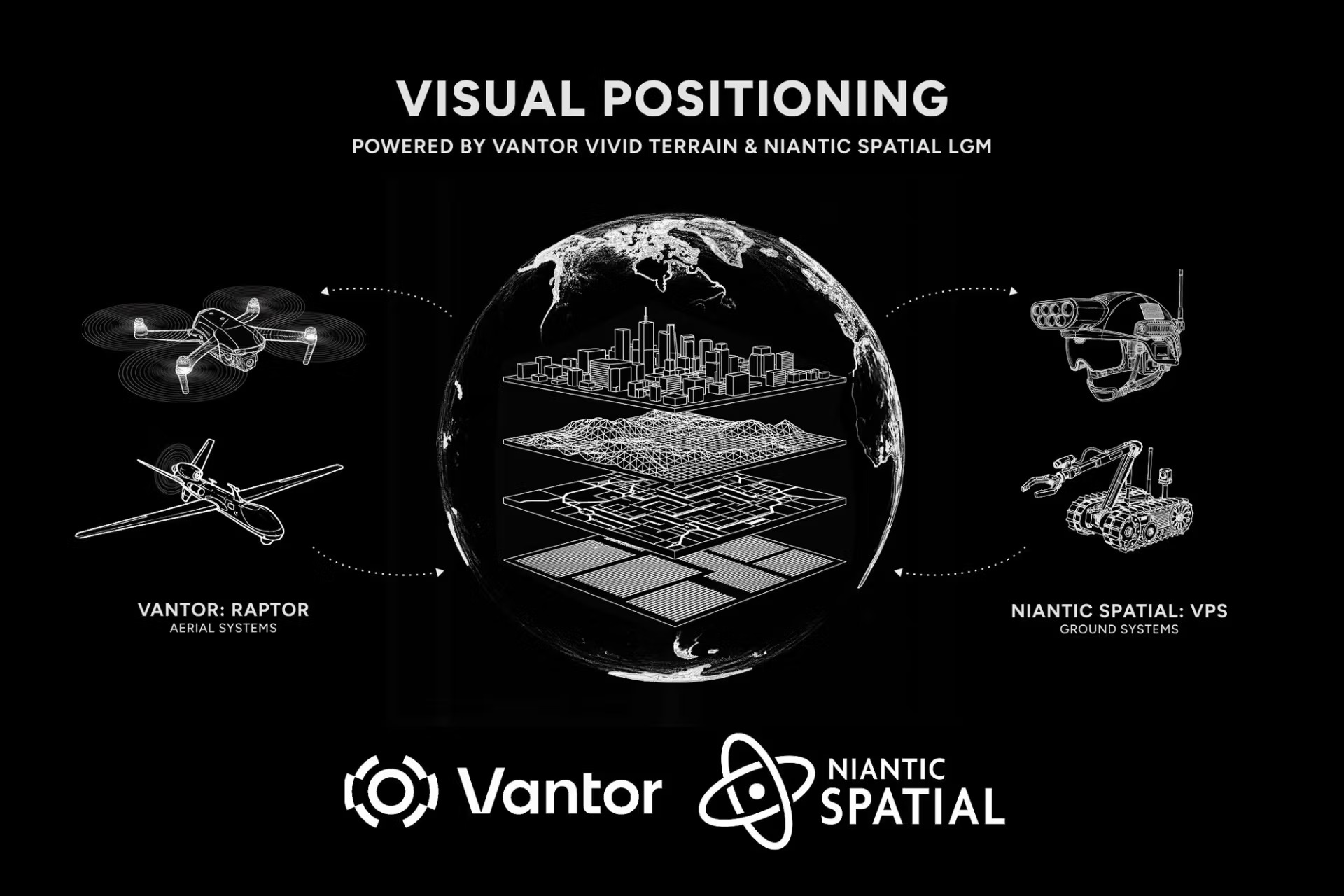
Enjoyable and video games, proper? Besides as reported by DroneXL, Niantic Spatial, which was fashioned when Savvy (by way of its Scopely division) bought Niantic’s gaming enterprise, launched a partnership with an organization known as Vantor in December 2025 “to ship a complete air-to-ground positioning answer that can allow air and floor platforms to navigate and coordinate exactly in GPS-denied environments.” As is the way in which as of late, that system can be dependent upon AI—which is educated, partly, by Pokémon Go knowledge.

Standard GPS methods depend on satellites, and just about all trendy navy navigation and focusing on expertise depend on GPS to perform. A fast strategy to disrupt enemy operations, due to this fact, is to disclaim entry to GPS performance. That is the place Visible Positioning Techniques—VPS—come into play: Merely put, they allow GPS-comparable navigation capabilities when GPS indicators fail. That could possibly be useful for anybody, however make no mistake: Vantor’s software program is utilized in navy drones, and that is clearly the corporate’s precedence.
The system being pursued by the Niantic Spatia/Vantor partnership is principally a two-parter: Niantic Spatial permits ground-based customers to seek out their means round precisely even with out entry to GPS, whereas Vantor does primarily the identical for airborne platforms.
You might like
“By combining Niantic Spatial’s experience in ground-based localization with Vantor’s confirmed aerial methods and international 3D basis, we’re constructing an built-in positioning community that operates anyplace,” Niantic Spatial chief expertise officer Brian McClendon mentioned when the deal was introduced. “Our Giant Geospatial Mannequin provides these methods the power to understand, align, and function in a shared body of reference—even when conventional GPS is unavailable.”
Pokémon Go knowledge is not getting used for direct mapping on this system: In an announcement to PC Gamer, Niantic Spatial mentioned “floor scans” collected by Pokémon Go are only one a part of the inputs used to coach its AI fashions. It additionally clarified that it would not have entry to any floor scan knowledge collected because the acquisition of the Niantic gaming enterprise as a result of that data belongs to Scopely, and that sharing the information it acquired previous to that isn’t a part of its cope with Vantor.
In its personal assertion, Vantor mentioned it’s “exploring adapting Niantic Spatial’s ground-based Visible Positioning System” to function with its personal methods, however added that it doesn’t have entry to the precise Pokémon Go knowledge. “Vantor’s GPS-denied positioning capabilities are underpinned by our personal 3D knowledge that we produce from our satellite tv for pc imagery,” a Vantor consultant mentioned.
Jeroen van den Hoven, a professor of ethics and expertise at Delft College of Expertise, instructed Dutch information web site Trouw that it will be very troublesome to say precisely how the Pokémon Go knowledge—almost 30 billion scans, in response to the Trouw report —was used within the coaching of Niantic Spatial’s AI methods. However he believes it will have been impactful.
“With out the big quantity of scans from all these players, the event of this method would by no means have progressed so shortly,” van den Hoven instructed the positioning. “The gamers have not directly, in a maybe minimal however nonetheless efficient means, contributed to navy functions.”
The information assortment in query is roofed by Pokémon Go’s TOS. The sections governing each Consumer Content material and AR Content material state that customers “grant to Niantic a nonexclusive, transferable, sublicenseable (by way of a number of tiers), worldwide, royalty-free, perpetual license” to principally do regardless of the hell they need along with your scans and knowledge.
Even when the sensible influence of this sort of knowledge assortment is minimal, as is outwardly the case right here, it is a ethical and moral minefield. “The individuals who thought they have been enjoying a recreation have clearly been fooled,” van den Hoven mentioned. “It’s progressively beginning to sink in that firms will not be essentially utilizing our knowledge to actually advance our lives by, for instance, enhancing schooling. It’s about being profitable. If they will promote a dataset or AI mannequin for a very good value, they may accomplish that.”


